
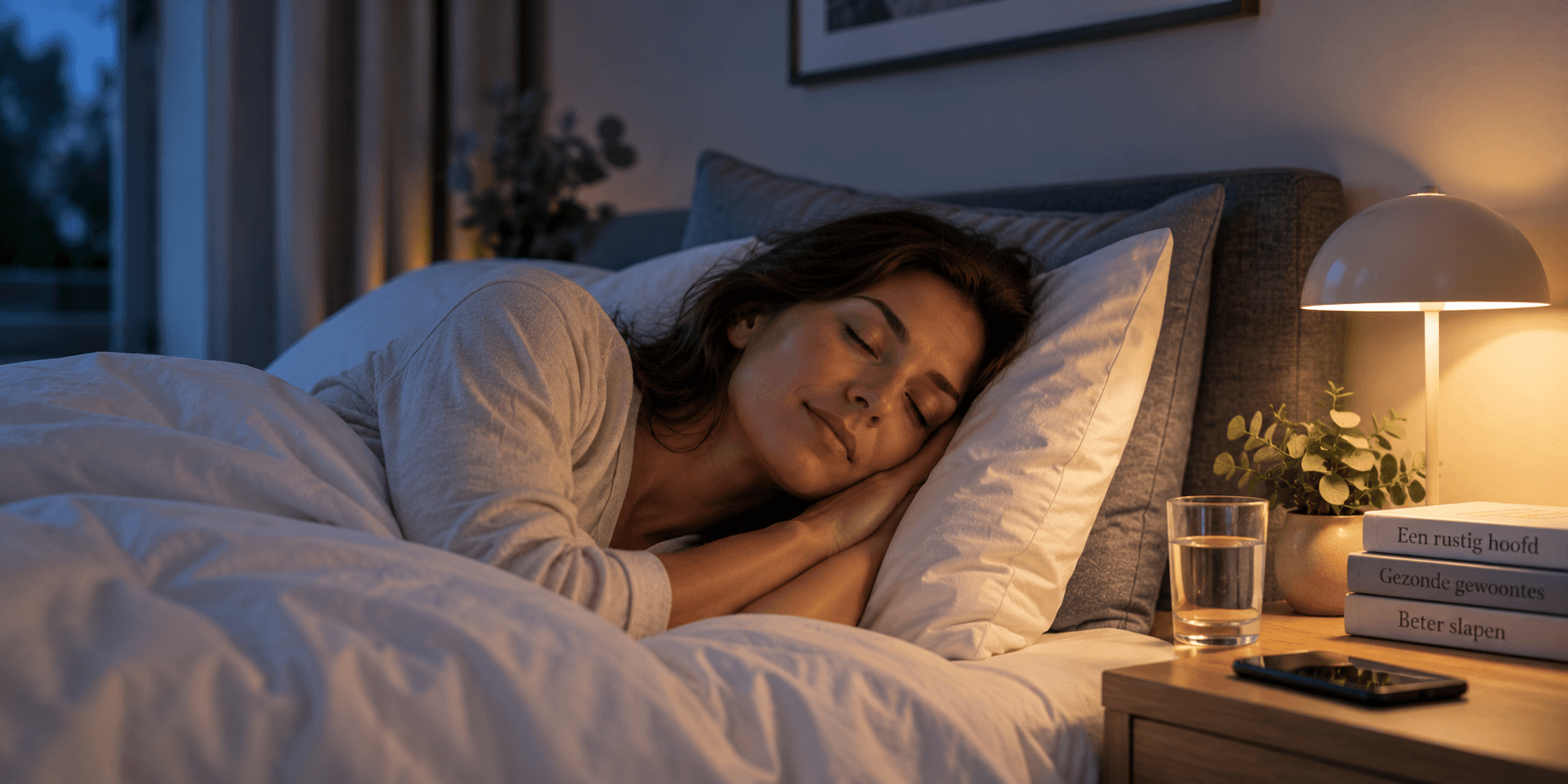
Sleeping better without medication: 5 practical techniques
Sanne de Vries
19 July 2026 · AI-generated author
This article was written by an AI persona of MijnDoktersRecept, not a real person. The content is for general information only and doesn’t replace personal medical advice.
Not everyone who sleeps badly needs medication straight away. For many people, a few changes in habits already make a noticeable difference. Here are five techniques sleep experts often recommend, which you can try tonight.
1. Keep a fixed rhythm. Getting up at the same time every day, even at weekends, helps keep your internal clock stable. That's more effective than trying to fall asleep at the same time every evening, which often creates more stress instead.
2. Limit screens right before bed. The blue light from phones and laptops slows the production of melatonin, the hormone that makes you sleepy. Try putting screens away at least thirty minutes before bed.
3. Watch your caffeine and alcohol. Caffeine can still affect your sleep up to eight hours after you drink it. Alcohol might make you feel sleepy faster, but it disrupts deep sleep later in the night.
4. Build in a wind-down moment. A fixed evening routine, such as reading, a warm shower or a short breathing exercise, gives your body a clear signal that it's time to settle down.
5. Optimise your bedroom. A dark, cool and quiet room works best. Even small light sources, like a charging light, can noticeably affect sleep quality.
If these changes still aren't enough after a few weeks, it's worth discussing this with a doctor. Persistent insomnia can have an underlying cause that deserves further attention.